
“No one should have no one”
Rayella Broomhead, Programme Manager at b:friend, shares the importance of giving loneliness a voice. This blog originally appeared on the Befriending Networks website during Loneliness Awareness Week 2026.
“You see, I’m just so lonely. I don’t really have friends so when I saw your poster I had to get in touch”
“I am used to being on my own and I am a bit of a loner but sometimes it gets too much. I find myself talking to the empty chair in my lounge, pretending someone is sat there”
When I started working at b:friend, I expected a stigma around loneliness. I didn’t think people would admit to being lonely. I certainly never envisaged people phoning and openly saying they need a friend, but that was my experience; hundreds of older people openly telling me they were lonely and needed our help.
The relief in people’s voices when they hear we don’t charge for befriending is heart-breaking. This isn’t only our Older Neighbours. We have many volunteers who tell us they are lonely themselves and that is their motivation for volunteering. Connection matters, irrespective of age.
I honestly thought it would be easier to find volunteers than it would be to find people who needed a befriender – how wrong I was! What I didn’t realise at the time was that loneliness is everywhere. It exists in busy towns, in bustling rooms and among people you may never expect.
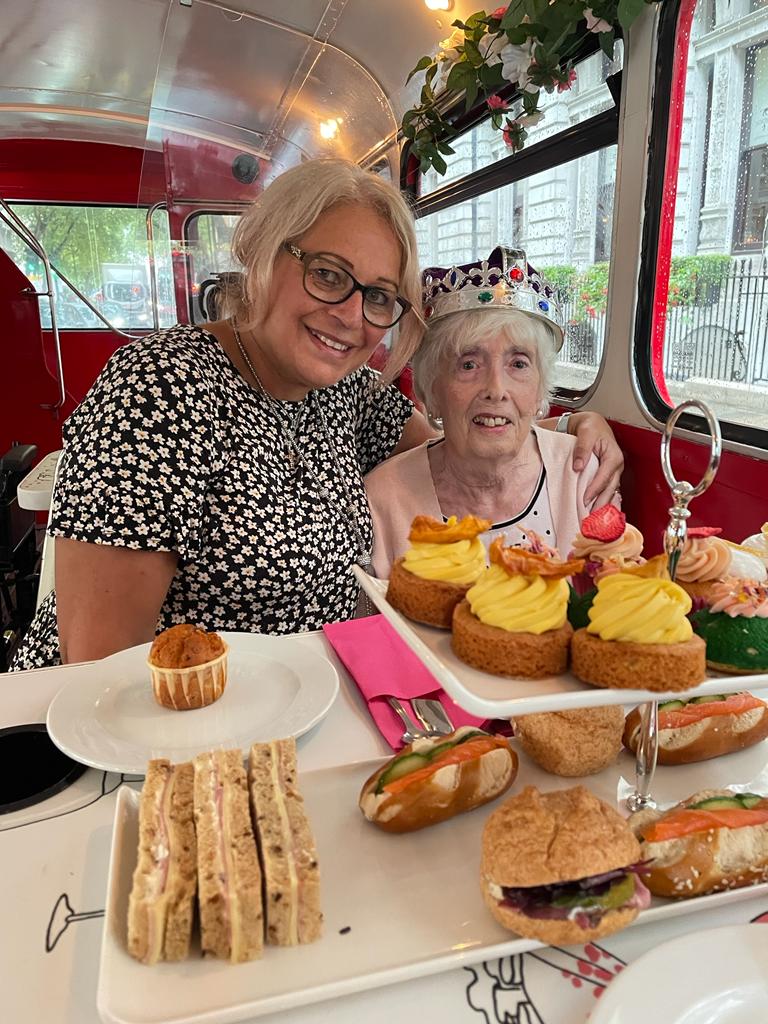
Nancy and Lorraine have afternoon tea on a London bus as part of their Buck-It list project
Many of the people we work with are incredibly resilient; they have survived loss, illness, caring for loved ones and major life changes. Lots of our Older Neighbours do have families and people round them, but they still miss regular companionship, conversation and social connection as they navigate changes in their lives and routines. That is why befriending matters. Why our incredible, dedicated volunteers matter.
While I never thought I would say this, some positives were taken from Covid and lockdowns. It changed the conversation around loneliness in many ways – it gave loneliness a voice. More people experienced being alone, missing people and feeling disconnected from others. Many more people came to realise that a conversation, socialising in a group or a regular check-in can make a world of difference.
Being lonely started to become part of life, people started to speak about it openly. It is so important it isn’t forgotten, now that the majority of people aren’t experiencing it. The more openly we talk about it, the easier it becomes for people to ask for help or tell someone how they feel.
Not everyone will use the word “lonely”, but many people will recognise feelings of isolation, disconnection, a quiet house or simply missing others.
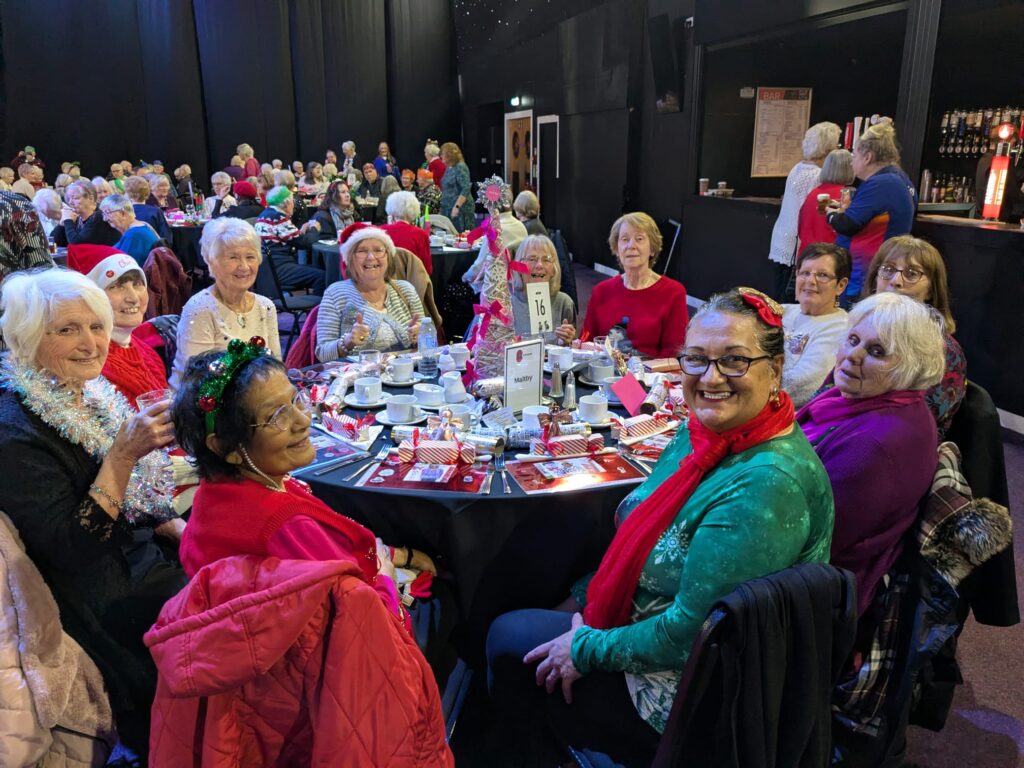
b:friend’s annual Christmas party brings all of their social clubs together to celebrate
One of the things we say regularly at b:friend is that no-one should have no-one. So how do we do this? Creating spaces where people feel comfortable opening up rarely requires grand solutions. Often, it is about warmth, consistency and removing judgement. It is about organisations feeling welcoming rather than clinical, volunteers having ordinary conversations rather than trying to “fix” somebody, and communities making space for connection to happen naturally.
Sometimes the conversations that matter start in the simplest way. A chat about the weather, football, someone’s garden or what they watched on television the night before can become something much bigger over time. Human connection rarely begins with the words “I feel lonely”, but it often starts with somebody taking the time to listen.
After almost ten years as a charity, hearing people say “I feel lonely” time and time again, I no longer think the biggest challenge is whether people are willing to admit it. I think the challenge is whether society is listening closely enough when they do.
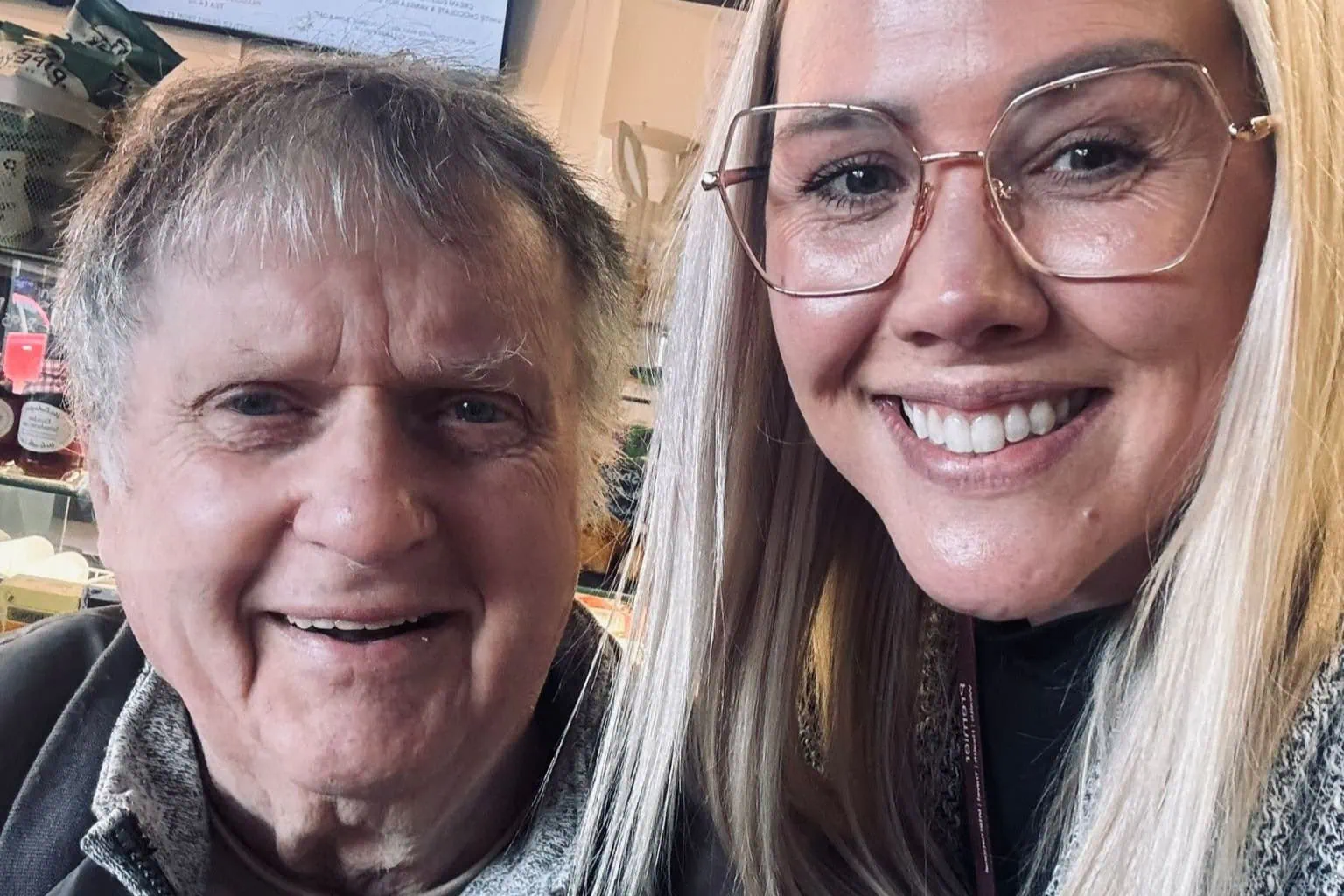
Main Image: John and Emily have been friends for a year, originally chatting on the phone and then going on to meet up in person, often chatting about their shared love of Sheffield Wednesday.